






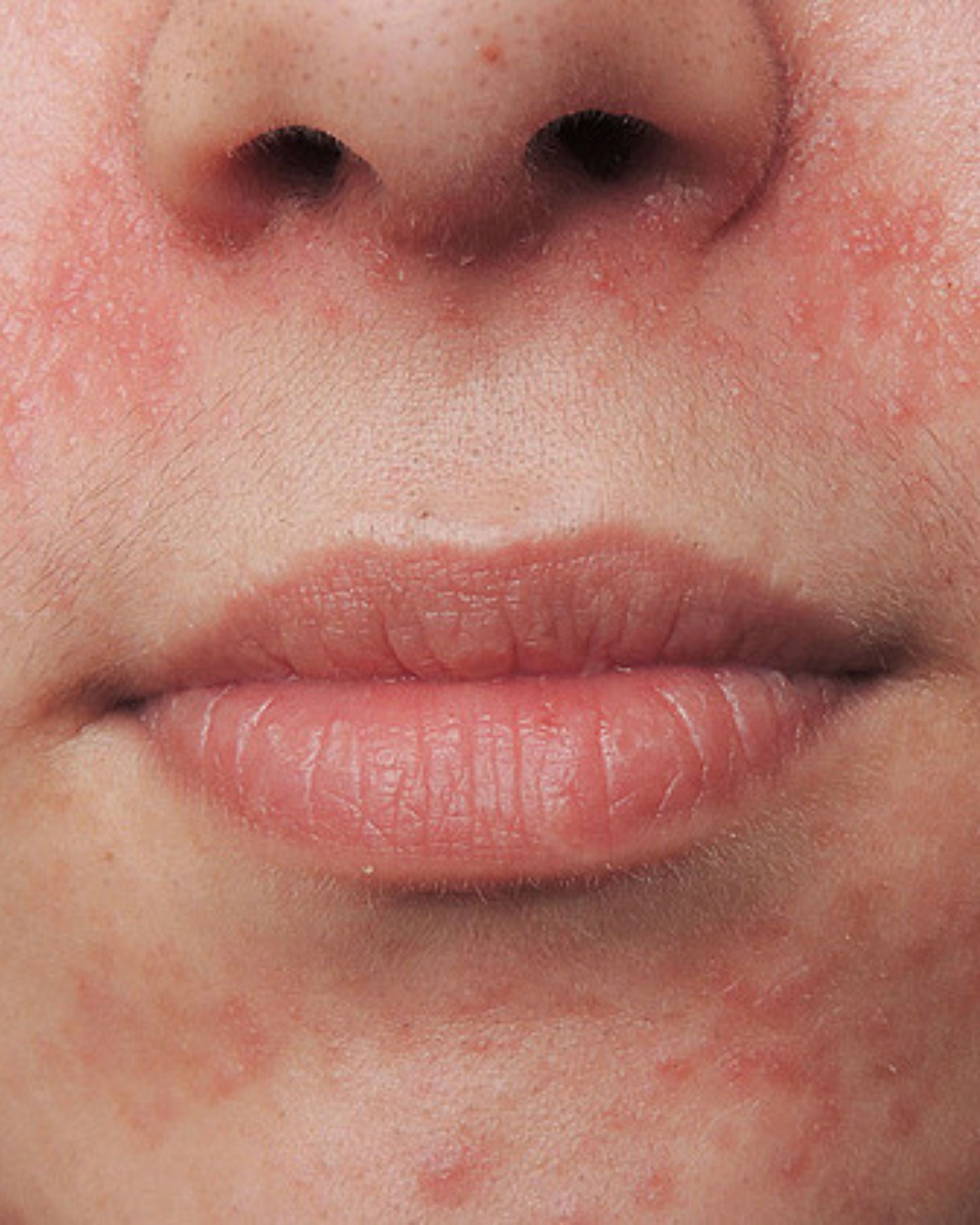
WHAT IS OVER‑TREATED SKIN?
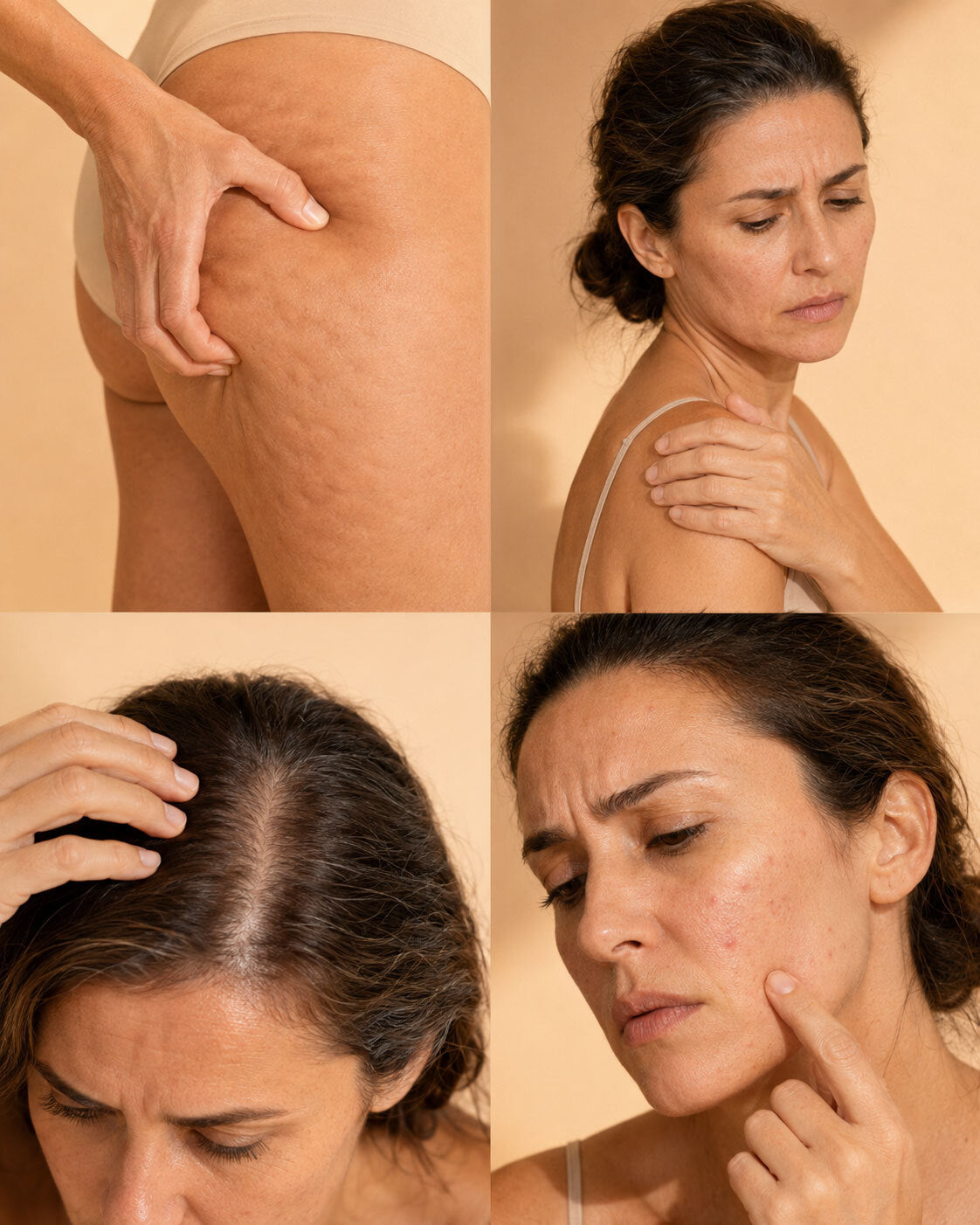
Over-treated skin can develop when the skin is treated too frequently or with too many different skincare products over an extended period of time. The skin around the mouth, in particular, often reacts sensitively to an intensive skincare routine.
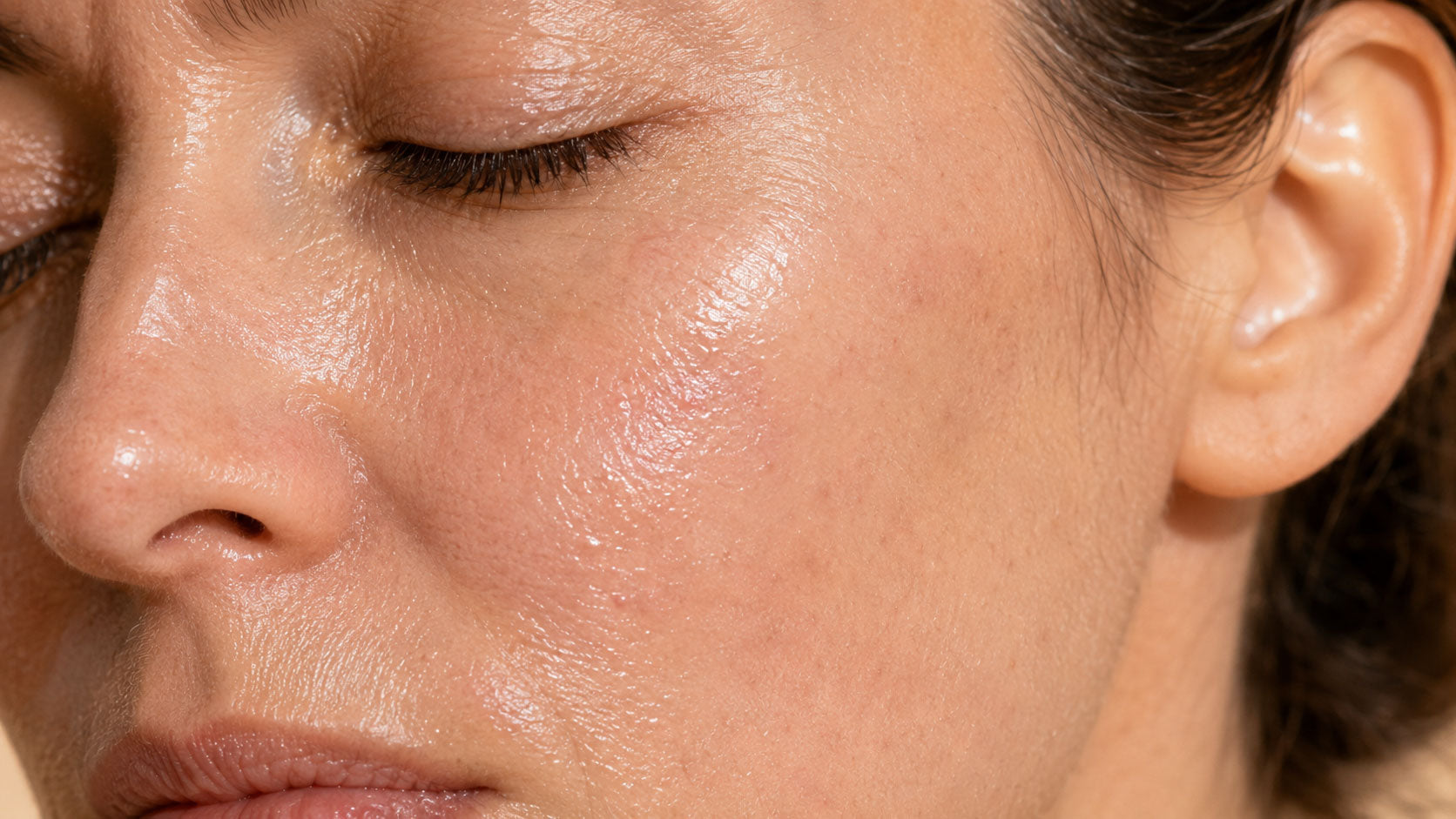
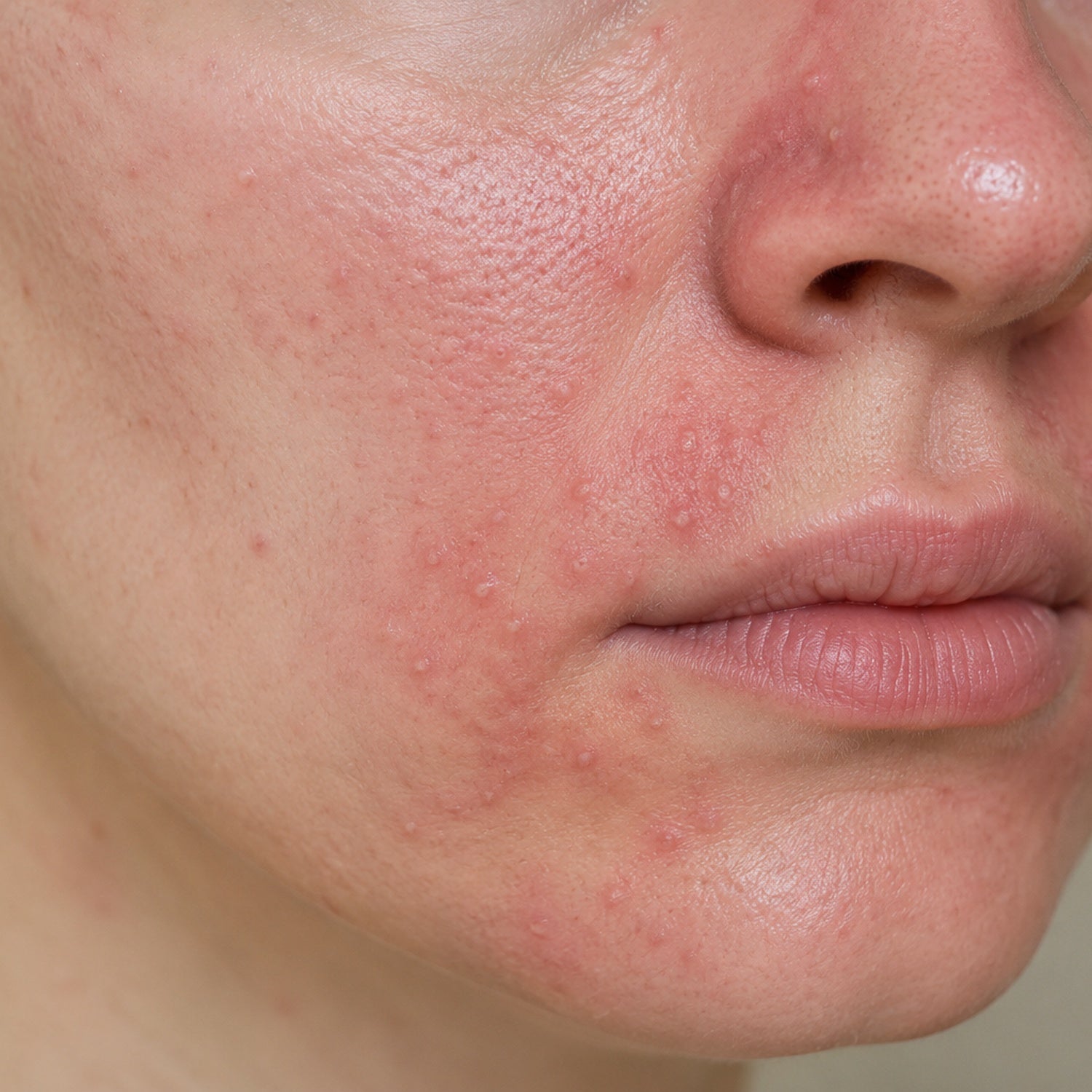
Over-treated skin often manifests visibly as redness, an uneven complexion, or small, raised patches of skin that can feel uncomfortable or irritating. These changes can persist for an extended period and require patience as well as a deliberately simplified, gentle skincare routine.
To support the skin’s well-being, it’s advisable to use mild, non-irritating skincare products and give the skin sufficient time to regain its natural balance. A holistic skincare routine that takes into account both external skincare habits and personal well-being can help support the skin’s regeneration process.
Propolis can help minimize skin rashes caused by over-moisturizing.

For supplementary skincare
What to do about over‑treated skin?
For visibly irritated or over‑treated skin, especially around the mouth and chin, a gentle and deliberately reduced care routine is particularly important. Many people prefer products that are mildly formulated and do not place unnecessary strain on the skin.
Propolis has long been valued for its caring properties and is well suited to support sensitive skin areas. Used within a simple routine, propolis can help nurture the skin and support a comfortable skin sensation.
PROPOLIS
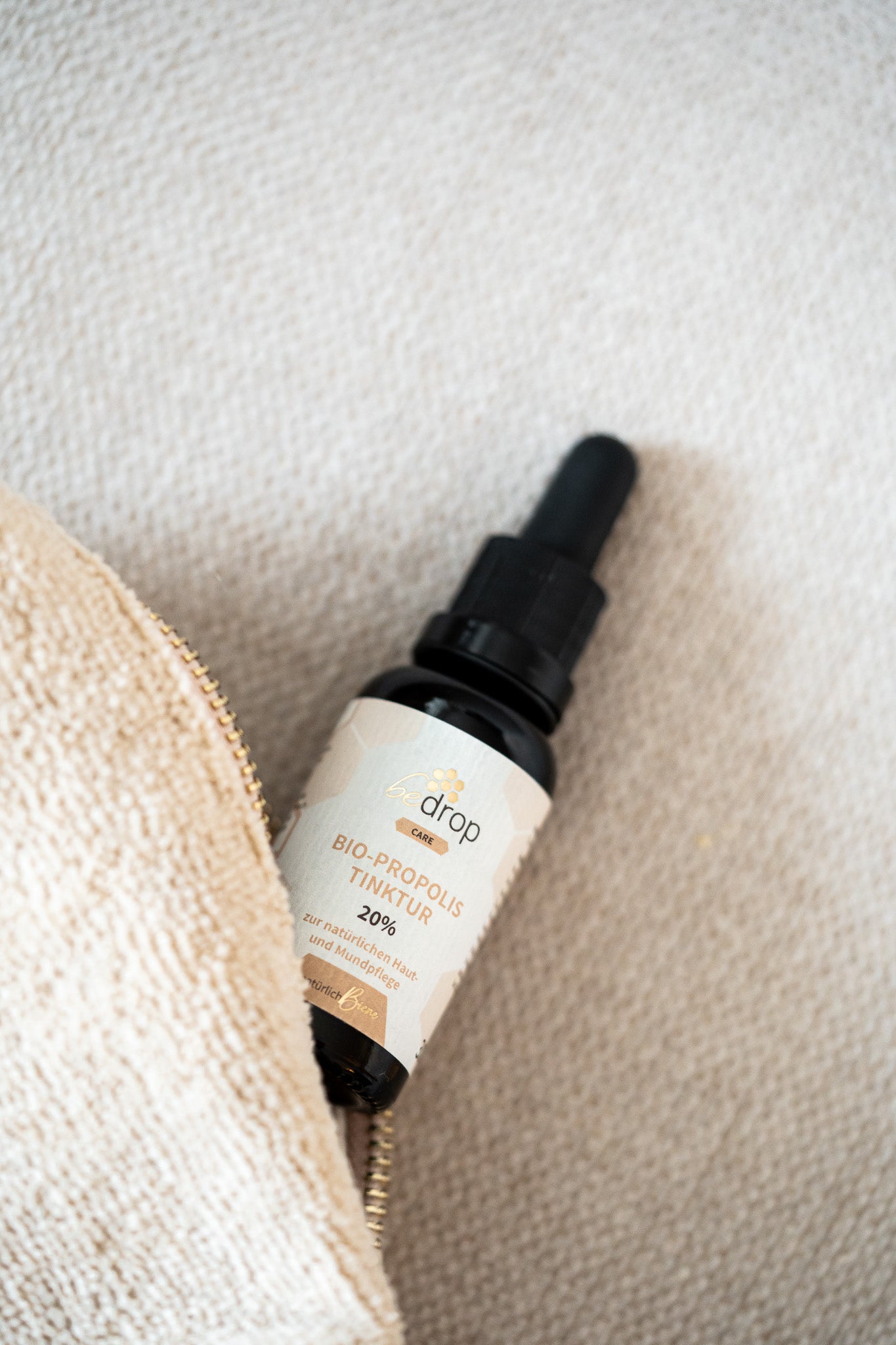
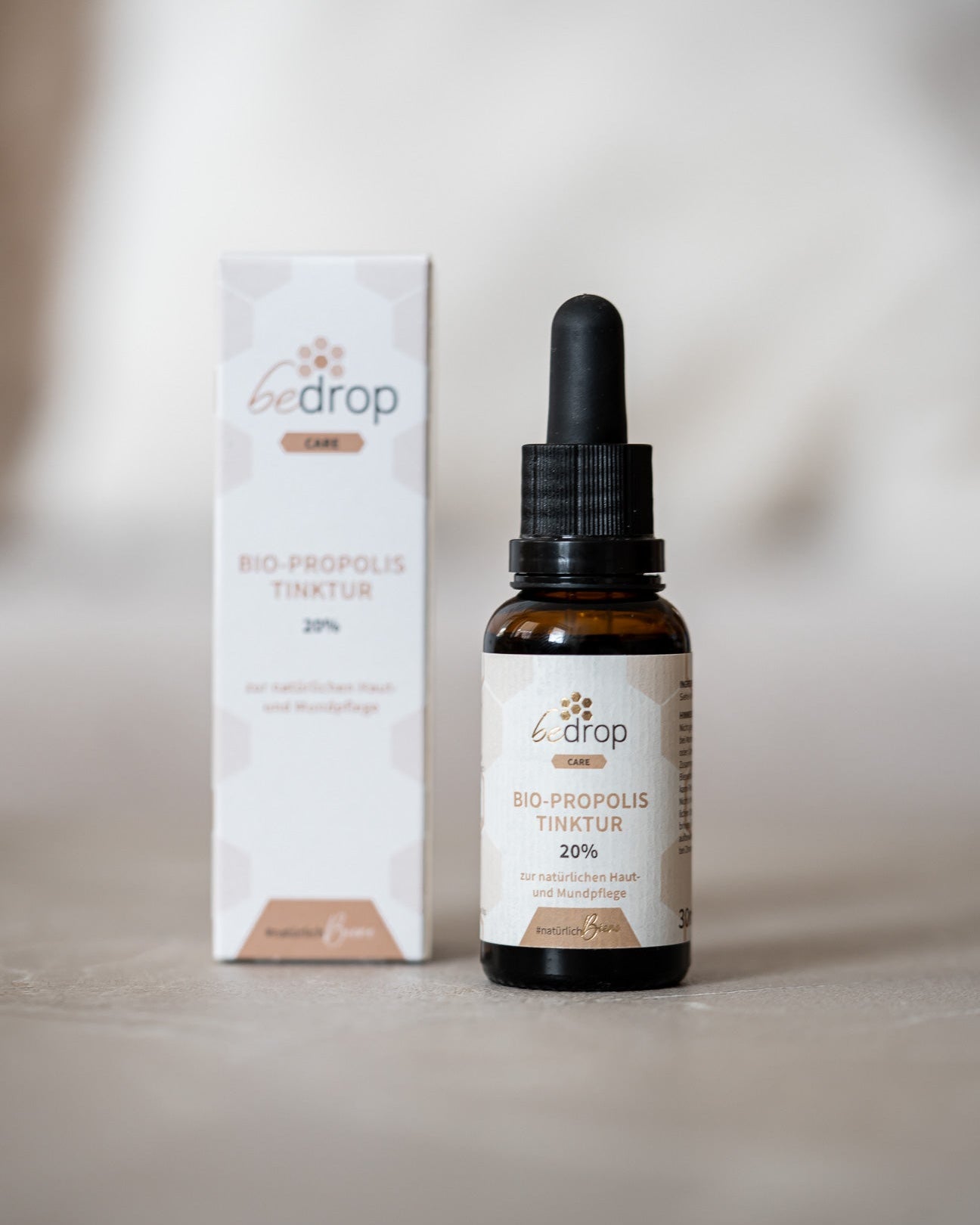
Propolis Tincture 20%
The Propolis Tincture 20% is excellent for mixing into a natural face cream. This way you can easily make your own propolis cream at home (here you’ll find the recipe for your DIY Propolis Cream). Apply this cream to the affected area or your face several times a day and allow it to absorb. The beneficial ingredients from the natural cosmetic cream and the propolis reach the affected area and intensely moisturise the skin, helping to soften dry, cracked areas and to improve comfort when the skin is itchy.
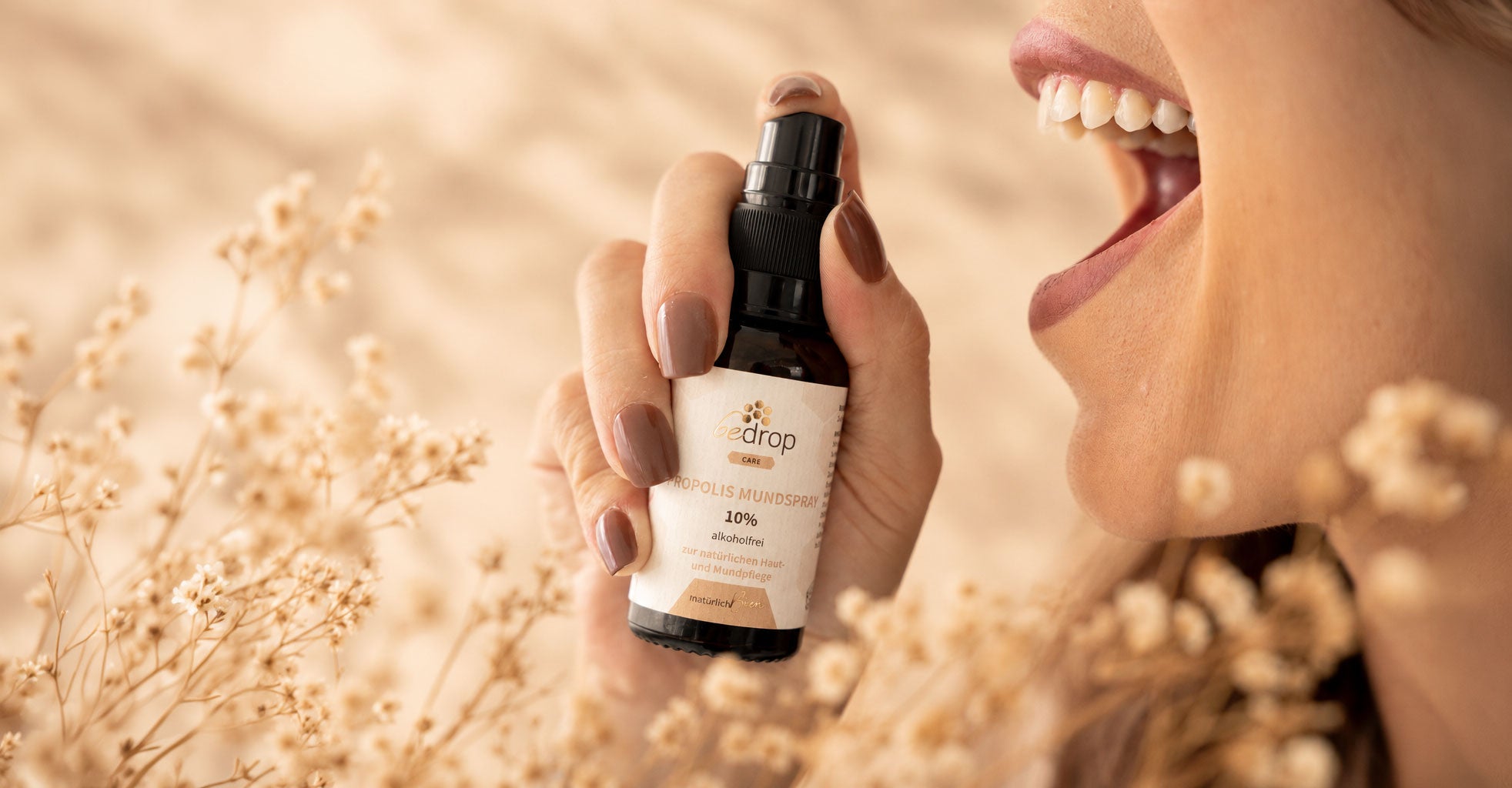
Propolis Spray alcohol‑free:
Our alcohol‑free Propolis Spray is suitable both for direct application to care for affected skin areas and for preparing a propolis facial toner.
The alcohol‑free Propolis Spray can be applied to affected areas with a cotton pad. The propolis is slightly sticky and acts like a natural plaster.
The propolis facial toner should be left to absorb briefly and then rinsed off with lukewarm water. Repeat the application with our alcohol‑free propolis spray several times a day as needed.
Troubled Skin and Bee Products
USAGE RECOMMENDATION:
Step 1:
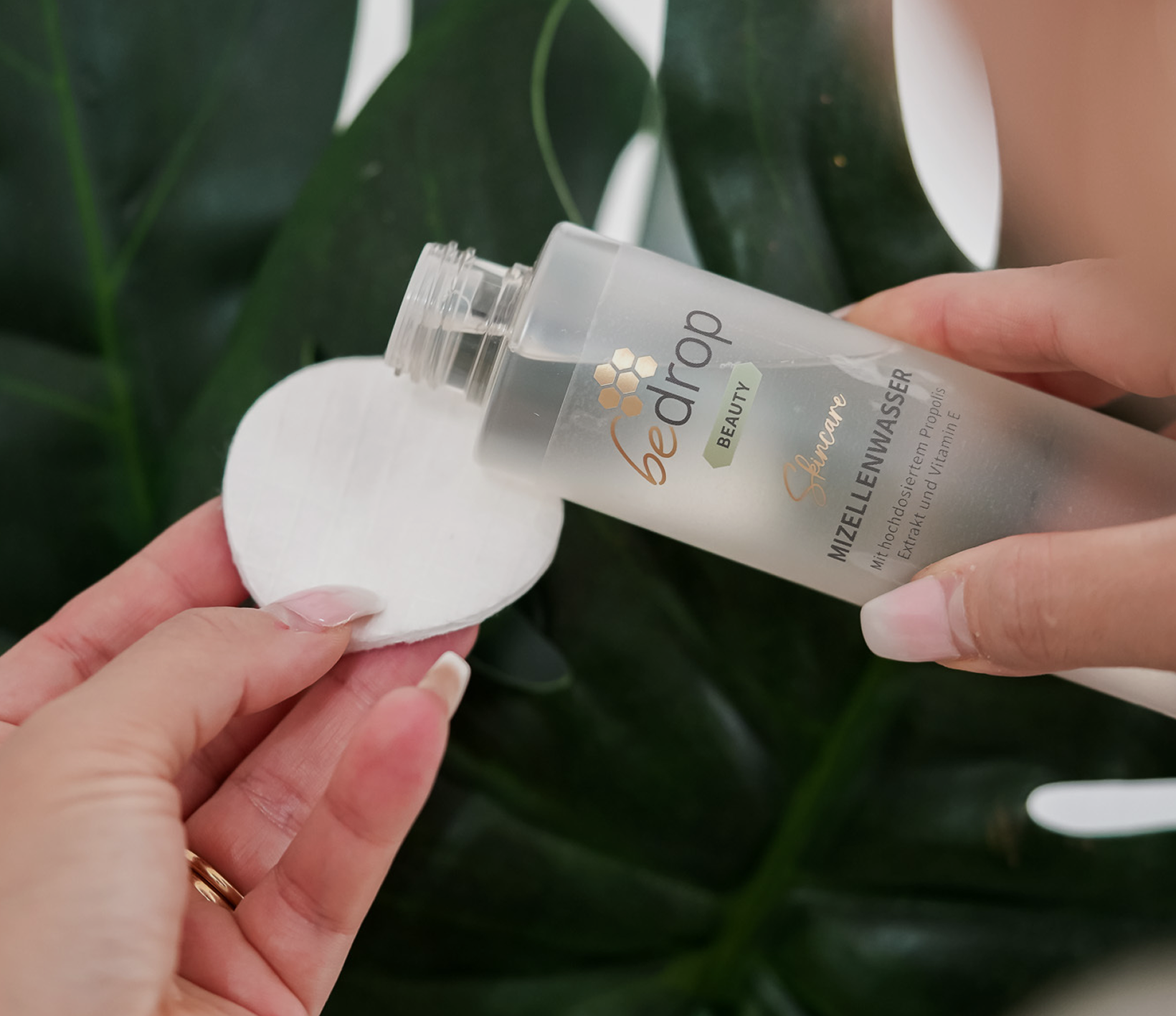
Micellar Water:
Put a few drops on a cotton pad and gently wipe across the face.
Step 2:
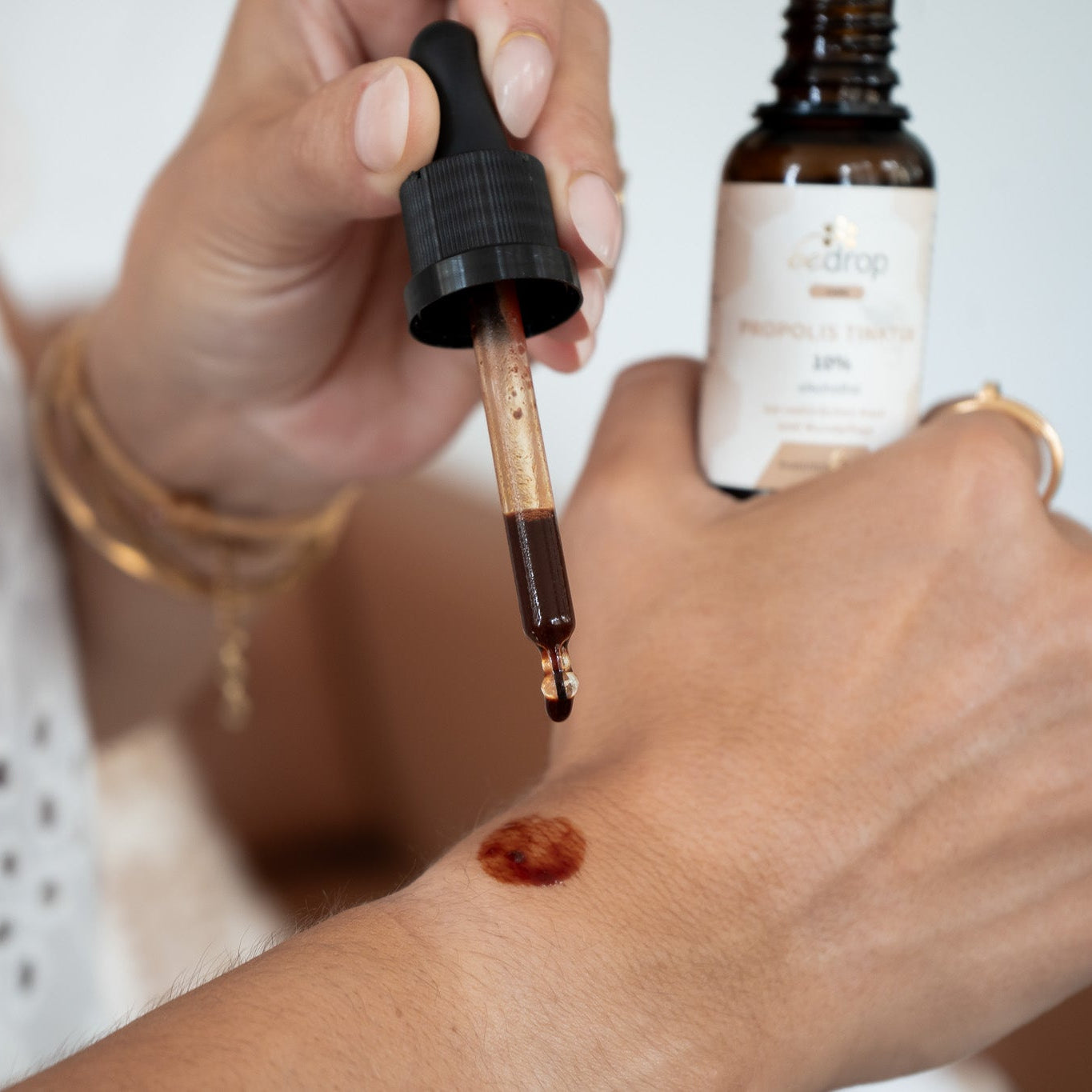
10% Propolis Tincture:
Drip 2–3 drops onto the affected area in the mouth area.
Step 3:
Combination:
Mix 2–3 drops of propolis into a mild cream and apply to the face.
SINGLE PRODUCTS
WHAT OUR CUSTOMERS SAY
Because I had recurring skin problems, I was looking for a strong propolis tincture. This one helped me a lot and I’ve already ordered it for the third time. Really great.
I’ve tried many propolis tinctures and use propolis every morning. This one is my new favourite — thank you!
I use bedrop’s propolis for my skin issues and my wellbeing. I suffer from eczema and was finally able to stop using cortisone creams — I am happy.
Perioral dermatitis: calming your skin the natural way
If the skin around your mouth suddenly reacts with redness, small bumps or itchy pustules, you’re not alone: perioral dermatitis affects many people. It’s also known as “mouth rosacea” or “flight attendant’s disease.”
People who care for their skin intensively are often more prone to it. The good news: with minimalist, natural care you can help restore your skin’s balance and minimise irritation.
What is perioral dermatitis?
Perioral dermatitis is a common inflammatory skin condition of the face. It appears as red, scaly bumps or pustules arranged symmetrically around the mouth, usually leaving a narrow, healthy border directly around the lips. It most often affects women between 16 and 45 years old, but men and children can also be affected.
About 10% of the population will experience some form of perioral dermatitis during their lifetime – sometimes as a single flare, sometimes recurring and stress-related. People who recognise the typical signs early and treat their skin with care can break the cycle of overcare, because for this condition the guiding principle is: less is often more!
How to recognise perioral dermatitis on the face:
Typical symptoms include:
- Red, small bumps or pustules around the mouth, sometimes also at the nose and eyes
- Dry, tight, sometimes flaky skin
- Mild itching or burning at the affected sites, but usually no severe discomfort
- No blackheads or pus-filled acne: different from acne
- The area immediately around the lips remains noticeably clear
Many people confuse perioral dermatitis with acne, rosacea or atopic eczema, which increases uncertainty. A clear diagnosis from a doctor helps identify the right measures to improve the skin’s appearance.
Important: Our recommendations and products are intended as a complementary skincare routine – they do not replace medical treatment.
Perioral dermatitis: causes and risk factors
There isn’t a single cause of perioral dermatitis; it’s usually a mix of skincare mistakes, individual skin needs and environmental factors. A common trigger is simply using too many skincare products.
The following factors can play a role:
- Excessive care & the wrong cosmetics:
Heavy moisturisers, thick sunscreens, oily make-up or harsh cleansers can overstress the skin.
- High UV exposure:
as well as laser cosmetic treatments can increase the risk.
- Stress & hormonal fluctuations:
Puberty, the contraceptive pill, pregnancy, menopause or stress can promote the appearance of small bumps around the mouth.
- Other influences:
Fluoride toothpaste, frequent wiping/rubbing of the face, mask-wearing or extreme weather (wind, heat) can harm sensitive skin.
- Corticosteroid creams:
While they can initially help with dermatitis and eczema, they damage the skin barrier in the long term and often cause a relapse of perioral dermatitis after stopping them.
The typical pattern: The skin is overtreated, reacts with irritation, produces more blemishes – and out of frustration more (often inappropriate) products are used. This negative spiral keeps turning.
Checklist: common everyday triggers
- Creams with many additives or mineral oils
- Fragrances and preservatives in cosmetics
- Regular use of make-up removers and cleansing foams
- Fluoride-containing toothpaste in the mouth area
- Frequently changing routines not tailored to your skin’s needs
- Masks (e.g. FFP2) and mechanical friction on the face
- Corticosteroid preparations (including nasal spray or inhaler)
Important: Our recommendations and products are intended as a complementary skincare routine – they do not replace medical treatment.
Perioral dermatitis: What helps?
Many people with perioral dermatitis ask: What helps quickly?
Not the quickest, but often the most lasting approach is the so‑called “zero therapy” – this means you deliberately avoid (almost) all skincare products and give your skin time to recover.
The aim is to restore the damaged skin barrier and minimise irritation. The skin may initially look worse (a rebound effect) in the first weeks, but patience usually pays off: After 2–4 weeks the complexion is usually visibly more balanced and the small pimples around the face noticeably decrease.
Step by step: How to do zero therapy correctly
1. Reduce care: Clean only gently with water or mild cleansing lotions. Or you can make a gentle, supportive propolis facial tonic without alcohol using our Propolis Spray, which acts like a kind of “natural plaster”. Propolis contains valuable natural ingredients that hydrate dry, cracked areas, make the skin more supple and provide soothing comfort for itchy skin.
2. Pause all cosmetics where possible: This includes creams, make‑up, scrubs and masks.
3. Stop corticosteroid ointments
4. Duration: At least 28 days – first improvements appear after 2–4 weeks.
5. Optional: Complement with low‑irritant, nature‑based products or soothing tinctures (if individually tolerated). For example, our Propolis Tincture 20% is ideal for mixing with a natural, gentle face cream that you can apply to your face and the affected areas and allow to absorb well.
This treatment method requires patience and self‑care but can help restore your skin’s natural balance.
Gentle care & natural products: What to watch for with perioral dermatitis
After zero therapy or as needed you can switch to minimalist, gentle products, for example:
- Creams with few ingredients, without fragrance and preservatives
- Light, non‑occlusive formulations
- Avoid anything that irritates the skin or clogs the pores
Tip: Propolis has proven useful for perioral dermatitis as well as eczema and atopic dermatitis. Propolis products can be a worthwhile addition to your care routine.
Perioral dermatitis: Propolis — the insider tip
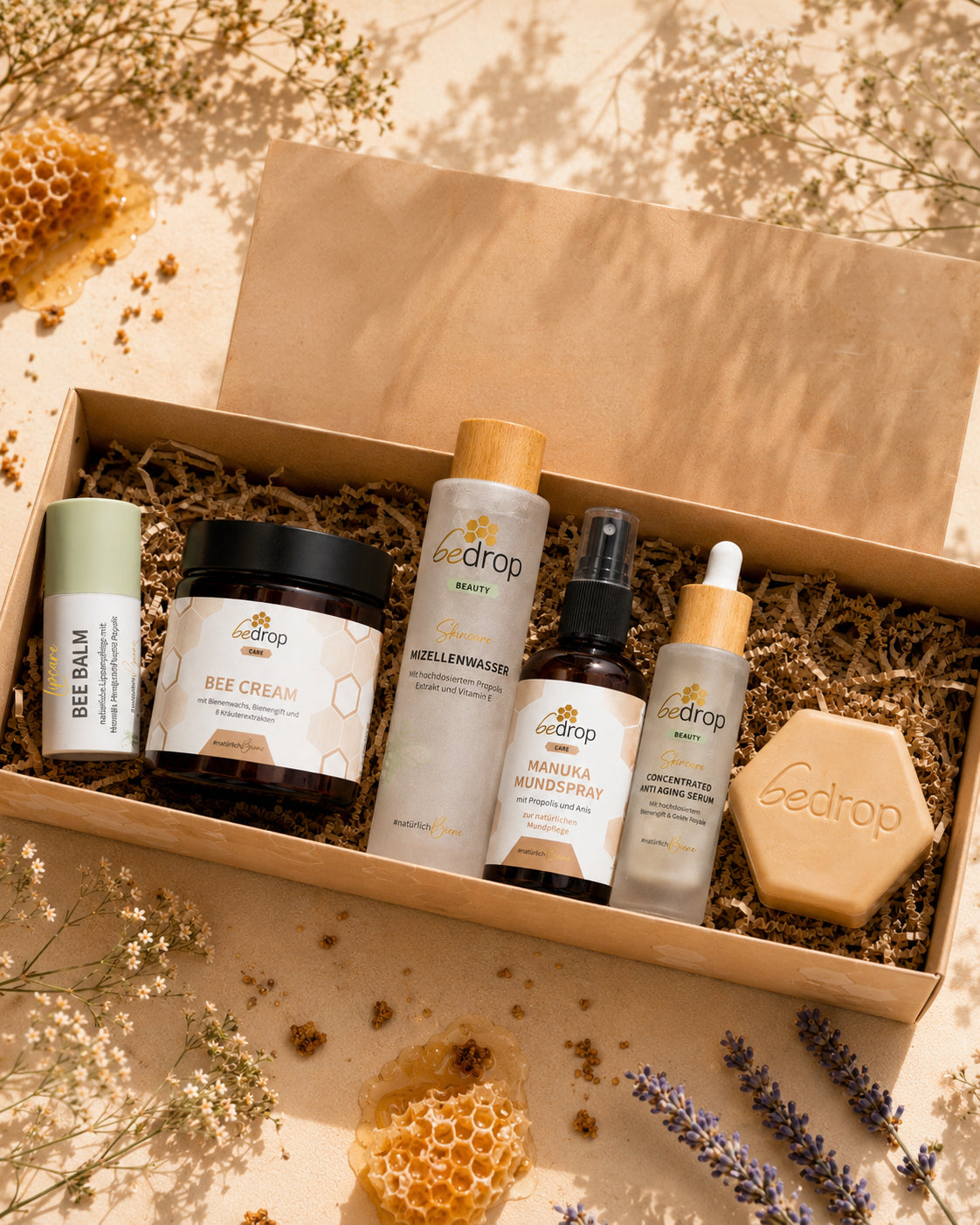
Powerful propolis products are available from bedrop in various forms: tincture, spray, cream or soap – depending on your needs and skin condition you can find the right support for over‑stressed skin.
Propolis is valued in many cultures as a nurturing bee product and is included in some formulations to support skincare, especially for sensitive or irritated skin.
- For supportive care with itching and redness (e.g. in atopic dermatitis)
- To support an intact skin barrier and moisture balance
- Pure, natural application – also available alcohol‑free for particularly sensitive skin
Expert tip: Also royal jelly is often used in skincare for its beneficial properties and valuable micronutrients and can enrich your routine.
More tips for everyday life and diet with perioral dermatitis
- Avoid very spicy or hot foods, alcohol and nicotine – these can promote inflammation.
- Make sure you get enough sleep and relaxation, as stress is an important trigger.
- Choose breathable masks that don’t further irritate the skin.
- Opt for mineral sunscreens with a light texture
- Hands off scrubs and rich, occlusive layers in facial care.
Maintain healthy skin in the long term
To avoid relapses, a holistic, minimalist approach is recommended. Natural products like those from bedrop give you maximum transparency about origin and ingredients.
With a stable, reduced routine your skin barrier stays strong and flexible – much like a healthy honeycomb. And remember: Less is more!
🐝 Learn more about:
- Acne
FAQ
Frequently asked questions
How is propolis used for over‑treated skin?
Propolis Tincture 20%
The Propolis Tincture 20% is ideal for mixing with a natural face cream. This lets you easily make your own propolis cream at home (here you’ll find the recipe for your DIY propolis cream). Apply this cream several times a day to the affected area or your face and allow it to absorb. The valuable ingredients from the natural cosmetic cream and the propolis reach the affected area and intensely moisturise dry, cracked spots, making them more supple and improving comfort for itchy skin.
Alcohol-free Propolis Spray:
Our alcohol-free Propolis Spray is suitable both for direct application to affected areas and for making a propolis facial tonic.
The alcohol-free Propolis Spray can be applied to the affected areas with a cotton pad. Propolis is slightly sticky and acts like a natural plaster.
The propolis facial tonic should be left to absorb briefly and then rinsed off with lukewarm water. Repeat application with our alcohol-free Propolis Spray several times a day as needed.
Propolis capsules
To support your body from within, we recommend the bedrop Propolis Capsules as a complementary part of your daily routine. Take 2 capsules daily with plenty of water. Our propolis capsules contain only pure propolis without additives – each capsule provides about 800 mg of pure propolis as a natural supplement.
Have any questions?
With our WhatsApp and Telegram support you can contact us at any time.
In our experience we reply within 5 minutes and can answer any question you have about perioral dermatitis and propolis.
You’re also welcome to send us an email at hallo@bedrop.de We look forward to helping you!